Friday | 3 February 2017 | 10:04 AM 
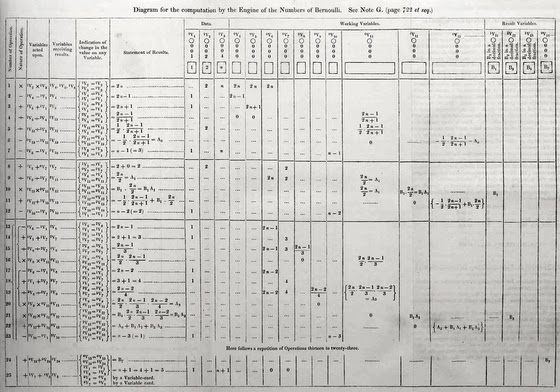
"In 1840, Babbage was invited to give a seminar at the University of Turin about his Analytical Engine. Luigi Menabrea, a young Italian engineer, and the future Prime Minister of Italy, wrote up Babbage's lecture in French, and this transcript was subsequently published in the Bibliothèque universelle de Genève in October 1842. Babbage's friend Charles Wheatstone commissioned Lovelace to translate Menabrea's paper into English. She then augmented the paper with notes, which were added to the translation. Lovelace spent the better part of a year doing this, assisted with input from Babbage. These notes, which are more extensive than Menabrea's paper, were then published in Taylor's Scientific Memoirs under the initialism AAL. In 1953, more than a century after her death, Lovelace's notes on Babbage's Analytical Engine were republished. The engine has now been recognised as an early model for a computer and her notes as a description of a computer and software. Lovelace's notes were labelled alphabetically from A to G. In note G, she describes an algorithm for the Analytical Engine to compute Bernoulli numbers. It is considered the first algorithm ever specifically tailored for implementation on a computer, and Ada has often been cited as the first computer programmer for this reason. The engine was never completed, however, so her code was never tested." Wikipedia
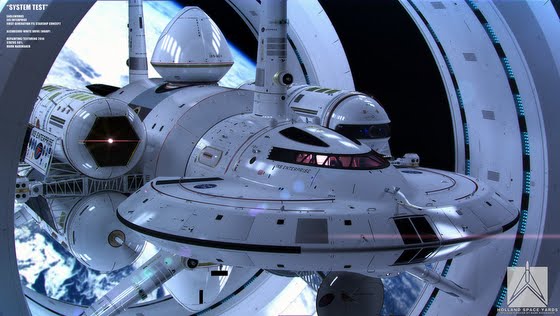
NASA physicist Harold White and artist Mark Rademaker design a FTL spaceship.
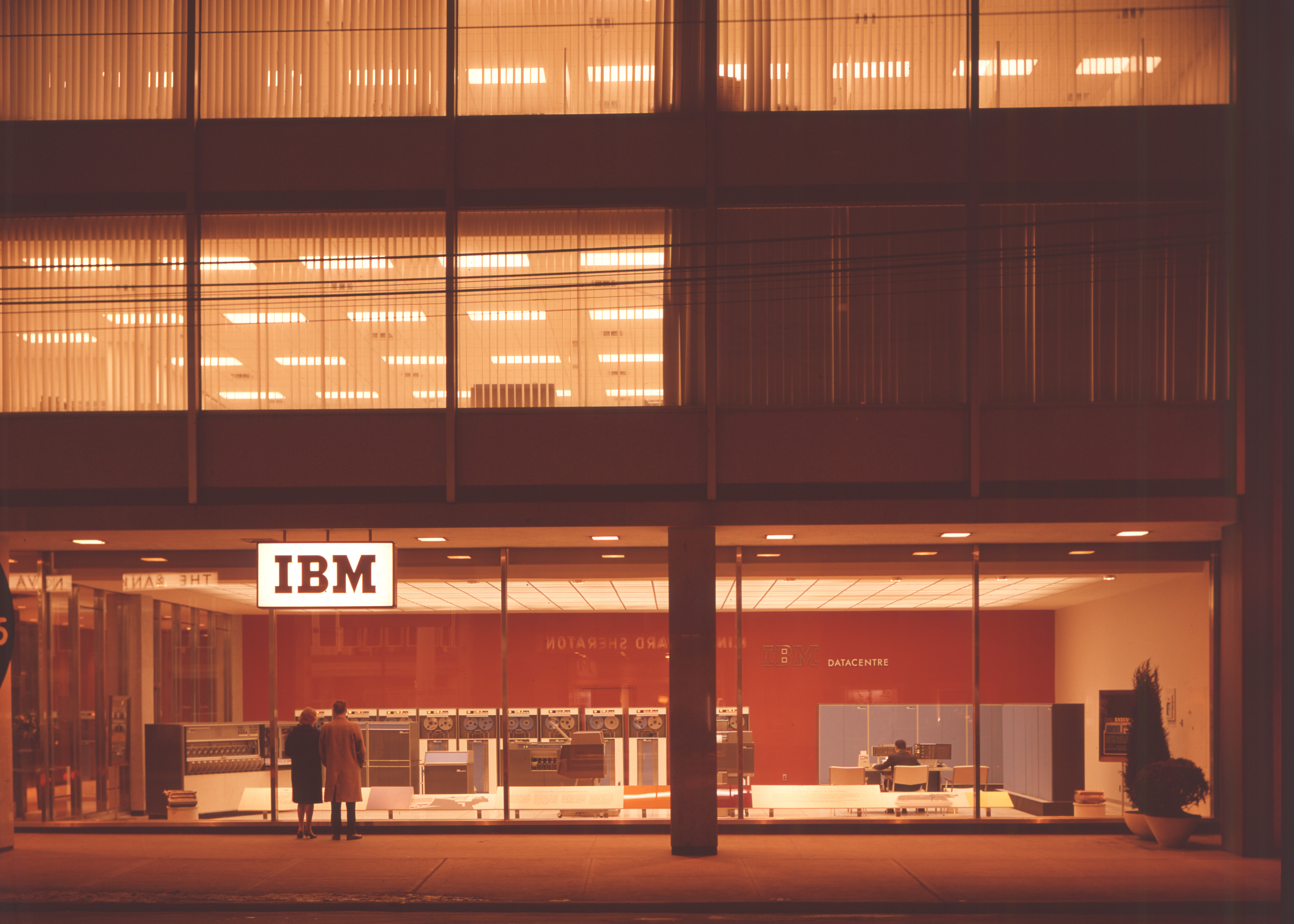
IBM Data Centre from the 1960's
Photo by George Dunbar
His fictional, near future sci fi, novels are excellent.
Ramez Naam, The Next 10 Years: Everything Is Connected
"The future is already here, it's just not very evenly distributed." ~ William Gibson

This new service that uses facial recognition technology and Facebook to promote deals makes my skin crawl! Minority Report here we come. I recommend you go read Little Brother now.
There are open source computer algorithms which programmers can teach to recognise specific objects and shapes. Google have created an "artificial brain" which can teach itself how to recognise objects and shapes. With Google's Project Glass now a reality, how long before we have this?